

Index Fund Tracking Difference: Why Your Fund Return May Not Match the Benchmark
An index fund aims to follow a market index. So why can its return differ from the index shown on the factsheet? The answer may involve fees, trading costs, cash holdings, taxes, currency and the way the fund copies the index. Small differences can be normal, but you should know how to read them.
This guide explains tracking difference and tracking error in plain English. It is for investors in many countries, so check the official document for your own fund and share class. Nothing here predicts future performance or recommends a specific product. The aim is to compare two funds fairly.
First Confirm What the Fund Tracks
Find the exact benchmark name in the factsheet. Two funds may say they invest in global shares yet follow different indexes. One might cover large companies; another may include smaller firms or use a special weighting rule. Different benchmarks produce different results even when both funds do their job well.
The SEC’s Investor.gov guide to index funds notes that index funds seek to track a chosen index and can underperform it because of costs and tracking error. Read the benchmark method before judging how closely a fund follows it.
Check the benchmark version
An index may be shown with or without reinvested dividends, or with a method that accounts for certain taxes. A fund return that includes reinvested income should not be compared with a price-only index. Ask whether the benchmark is gross return, net return or price return and make the comparison on matching terms.
Tracking Difference Versus Tracking Error
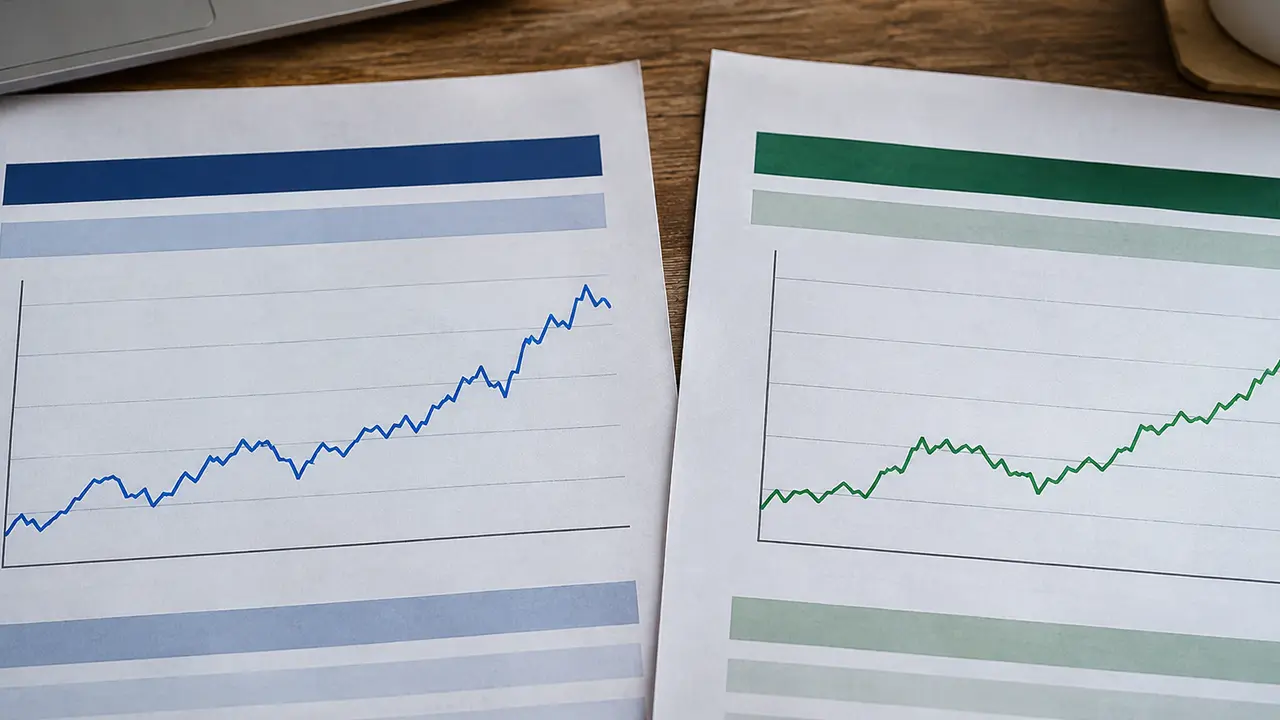
Tracking difference is the gap between the fund’s return and the benchmark over a period. If an index returns 8% and the fund returns 7.6% over the same period using comparable calculations, the fund lagged by 0.4 percentage points. That is a sample calculation, not a typical result.
Tracking error is different. It describes how much the return gap changes over time. A fund that trails by nearly the same small amount each period may have low tracking error. A fund that swings above and below the index may have higher tracking error even if its total gap looks small in one year.
A simple comparison
Imagine Fund A trails its benchmark by about 0.2 percentage points every year. Fund B beats it by 1 point one year, then trails it by 1.4 points the next. Both may have modest average differences over two years, but Fund B has been less consistent. Do not infer future outcomes from this small example.
You may see tracking error reported as a percentage based on a set period. Check the measurement period and method. A number without a definition cannot be compared fairly across providers.
Fees Are a Common Reason for a Gap
A fund has operating expenses even when it simply follows an index. The index itself does not pay a fund management fee. That means a real product may lag its benchmark by some of its costs. Other costs may also affect results, so do not assume the tracking difference equals the expense ratio exactly.
The SEC’s fee guidance explains that investment funds pass expenses to shareholders. Compare a fund’s published ongoing cost with its long-term return gap, then check for reasons they differ.
A cost example
Suppose two funds follow the same index, but one charges 0.10% and another 0.45% per year. The fee gap is 0.35 percentage points each year before other effects. Over a large or long-term holding, costs matter. Yet the cheaper fund is not always the better match if it has a different index or structure.
ETF investors should also check trading commissions, bid-ask spreads and currency conversion costs. Those affect the investor’s personal return even when they do not all appear in the fund’s published benchmark gap.
Look at How the Fund Holds the Index
A full-replication fund may try to hold every security in the index in roughly the right weight. A sampling fund may hold a selected set that aims to behave similarly. Some funds use swaps or other instruments instead of owning the exact basket. Each method has costs and risks.
A broad index may contain thousands of securities, including shares that are costly to trade. Sampling can reduce transaction costs but may create a different result from the full index. Read the investment method and counterparty risks, if any, in the prospectus.
Check cash and rebalancing
A fund may hold cash while waiting for investor money to be invested, to pay expenses, or to handle withdrawals. It also has to trade when an index changes. Those actions can create small differences from an index calculated without real trading constraints.
Securities lending may add income to some funds, which can offset costs, but it also brings rules and risks. Do not assume it is present or absent; look for the disclosure and how revenue is shared.

Watch Currency and Withholding Tax
If an index is shown in one currency and your fund class in another, exchange-rate changes may dominate the comparison. Use the same currency for both series or rely on the manager’s matched benchmark figures. A currency-hedged share class has its own costs and performance pattern.
Dividends from foreign companies may face withholding taxes. A fund’s domicile, legal structure and benchmark version may affect how these show up. The details can be complex and depend on treaties and local rules. Avoid making tax assumptions from a one-page chart.
Do not mix exchange prices with net asset value
An ETF trades on an exchange, where its market price can differ from the value of the assets it holds. A return calculated from an exchange price may not match one based on the fund’s net asset value. Compare like with like and check the source of each figure.

Review More Than One Year
Look at annual tracking difference over several years when data is available. A single year can be affected by a market shock, fund launch, index change or tax event. Check whether the same method and benchmark were used throughout the period.
A fund that changes its benchmark should be assessed in two parts. Do not treat returns before and after the change as if they were one unchanged strategy. Read notices and official reports rather than relying on a summary score from a comparison site.
Use a fair comparison table
Put two or three funds that follow the same exact index side by side. Note their share class, currency, ongoing fee, benchmark return basis, tracking difference, tracking error, holdings method and trading costs. If the information is missing, mark it as unknown instead of guessing.
Ask whether a larger gap has a clear reason. A lower cost fund may still track less closely due to its sampling method or local market conditions. A small positive tracking difference in one year does not mean it has found a way to beat its own index forever.

A Five-Minute Check Before Buying
- Confirm the exact index name and return version
- Match the fund and benchmark currency
- Compare the same time period
- Find the ongoing expense and trading costs
- Read the replication or sampling method
- Check several years of tracking difference
- Read any warning about taxes, cash or lending
Then place the result in the context of your goals. A fund can track an index closely and still lose money when that market falls. Close tracking is not the same as safety. Choose the exposure and risk level first, then compare how well different funds deliver it.
What About Tracking Error During Market Stress?
When markets move quickly or trading becomes difficult, gaps can widen. Thinly traded holdings, market closures, fund flows and currency moves can complicate the calculation. A temporary difference does not always signal poor management, but it deserves an explanation.
Check whether the fund manager published a notice about unusual market conditions. Do not make a rushed trade based on one day’s difference. If you need cash soon, market risk and fund liquidity may matter more than small tracking changes.
Common Questions
Should an index fund match its index exactly?
Not necessarily. Real funds pay costs and must trade securities. A small gap can be normal. The method and size of the gap should still be clear in official documents.
Is tracking difference the same as the fee?
No. Fees are one cause, but trading, taxes, cash, lending income and currency can also affect the result. Compare both measures.
Does low tracking error mean low investment risk?
No. A fund can follow a risky index very closely. Tracking error measures deviation from a benchmark, not the size of possible market losses.
The key is to compare the right benchmark, currency and time period. Once you understand those, tracking difference becomes a useful check on fund delivery rather than a mysterious score.


One Comment