How to Read a Fund Factsheet Before You Invest: A Plain-English Checklist
A fund factsheet can help you decide whether an investment fits your plan. But it is easy to focus on a strong past return and miss the parts that matter: what the fund owns, how much risk it takes, what it costs, and how you can sell. A good review takes more than a glance at the top number.
This guide gives you a repeatable way to read a mutual fund or exchange-traded fund (ETF) factsheet. It is for a global audience. Product names, disclosure rules and taxes differ by country, so always read the official document for the fund you can actually buy. The goal is to understand a product, not to predict which fund will win next year.
First Find the Right Document
Open the investment manager’s official site and search for the latest factsheet for the exact share class or ticker you are considering. The same fund family may offer several classes with different currencies, fees or distribution rules. Check the date, legal name, share class, currency and fund identifier before you compare anything.
Some markets provide a key information document or a short fund summary in addition to a longer prospectus. These are useful, but do not assume the factsheet is the contract. The SEC’s Investor.gov advises investors to read the fund prospectus before deciding to invest. The local version of that principle is simple: read both the summary and the full official terms when a detail matters.
Check the date before the numbers
A factsheet may show holdings from the prior month or quarter. A fund can change its mix in that time. Do not treat a dated portfolio snapshot as a live trading screen. Note when it was updated, and ask whether the numbers are gross or net of fees.
Read the Goal in One Sentence
Most funds tell you what they aim to do: track an index, earn income, grow capital, or blend several goals. Translate the goal into ordinary words. For example, a fund that follows a broad world share index is meant to reflect a large group of companies, not to protect your savings from every loss.
Next compare that goal with your own. Money needed for rent, school fees or an emergency in a few months has a different job from money you may leave invested for decades. Even a well-run fund may be a poor fit when the time horizon is wrong.
Ask what must happen for the fund to do well
A bond fund may depend on interest-rate moves, credit quality and the time until its bonds mature. A stock fund may depend on company earnings and market prices. A currency-hedged fund adds another layer. If the factsheet uses words you cannot explain, find the definition before buying.
Look Inside the Fund: Holdings and Concentration
Look for the split among stocks, bonds, cash and other assets. Then find the largest positions, sectors and countries. The label on the fund can sound broad while the actual holdings lean toward a few companies or markets. A top-ten holdings table often reveals this at a glance.
Suppose two funds both say they invest worldwide. One holds companies across many sectors. The other places a large share in a few technology names. They may both be global funds, but they will behave in different ways. Compare the actual mix, not the marketing name.
If you already own other funds, check overlap. You may think you have five separate investments when they all hold many of the same large firms. Overlap is not always bad, but you should know it exists. A simple list of the largest holdings across your portfolio can reveal it.
Remember what is missing
Factsheets often show only the largest holdings. For a full view, use the manager’s portfolio disclosure or periodic report. If a fund uses derivatives, borrowing, or a complex rule set, take time to read the method and risks in the prospectus.

Make Sense of the Risk Figures
A fund may show a risk scale, past ups and downs, or measures such as standard deviation. These figures describe parts of risk; they do not guarantee the size of a future loss. Read the explanation beside them. A risk score from one country may not be directly comparable with a score on another market’s document.
For a share fund, look at how far its price fell in bad periods and how long it took to recover. For bond funds, examine credit quality and sensitivity to rate changes. For funds that invest abroad, exchange rates may change the return you see in your home currency.
Use a loss test that fits your life
Imagine your investment fell 20% for a time. Could you leave it alone, or would you need to sell to pay a bill? The number is only a stress-test example, not a forecast. If a short-term loss would force you to sell, the fund may not be right for that money.
The SEC’s Investor.gov mutual fund guide reminds investors that funds carry risk and can lose value. Past stability does not remove that risk. Pay attention to the reason a fund may lose money, not only a single risk score.
Compare Fees the Right Way
Look for an ongoing expense figure. A fund may call it an expense ratio, annual charges figure, or ongoing costs. Find out what that number includes and which costs sit outside it. Trading costs, broker charges, taxes, currency conversion and account fees can affect your final return.
For a simple example, suppose one fund charges 0.20% per year and another charges 0.80%. On a 10,000-unit holding, that is roughly 20 versus 80 units per year before changes in value and other costs. The difference is about 60 units in that year. This is not a prediction of returns; it only shows why a small percentage deserves attention.
Fees matter, but they are not the sole test. A low-cost fund that invests in the wrong assets for your goal is not a bargain. Compare funds that aim to do similar jobs before judging cost.
Look for a separate purchase cost
Some products charge when you buy or sell. Some have a bid-ask spread, a difference between market buying and selling prices. Others charge through an adviser or platform. Ask for the full amount you would pay to invest and later withdraw, not just the cost printed in large type.
Read the Performance Table With Care
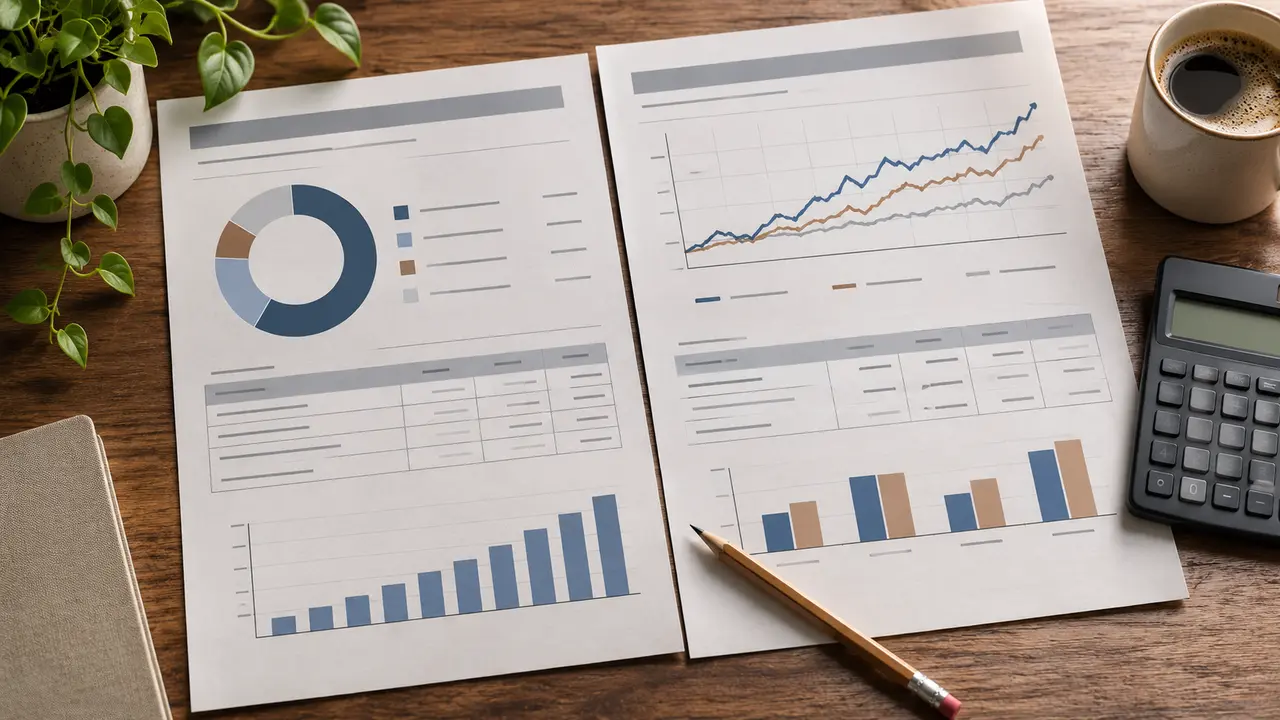
A factsheet often shows returns over one, three, five and ten years. Check whether the returns are annualized, whether they include reinvested income, and which currency they use. A one-year number should not be compared directly with a five-year annual average.
Check the benchmark: an index chosen to show what the fund is trying to match or beat. A global stock fund compared with a narrow country index may look better or worse for reasons unrelated to manager skill. Use a benchmark that fits the fund’s goal and assets.
In its guide to prospectus performance tables, Investor.gov explains that past performance does not assure future results. Treat the table as a record of what happened, including bad periods, rather than a promise.
Do not chase the best recent number
A fund may rank near the top after a lucky year. That alone tells you little about what will follow. Read how the fund is managed, whether it changed strategy, and whether its risk level rose. Compare a full market cycle when data allows, but remember that even long records cannot remove uncertainty.
Understand Income, Currency and Taxes
Some funds pay cash income; others reinvest it. A distributing class may send dividends or interest to your account. An accumulating class may keep that income inside the fund. Neither format is automatically better. Taxes and cash needs can make one more useful than the other.
Read the base currency and the trading currency. A fund can be listed in one currency while owning assets priced in many others. Changing the display currency on an app does not always remove exchange-rate risk. Check whether currency hedging is used, what it costs, and what it seeks to reduce.
Tax rules depend on where you live, where the fund is based, and the kind of account you use. The factsheet may give a summary, but it will not explain every investor’s tax position. Use official local tax guidance for a decision that matters.
Check How You Buy and Sell
A daily-priced mutual fund and an exchange-traded fund may work differently. One may deal at a set daily price; the other may trade during exchange hours with a spread. Some funds have minimum investments, dealing cut-off times, settlement delays or redemption rules. Read these before putting in money you might need soon.
A practical comparison
Imagine you need to sell part of a fund to pay a large expense. Check the first date you can place an order, when the price is set, when cash is available, and whether there are charges. A fund with the right long-term investments can still be awkward for short-notice cash needs.

A 15-Minute Fund Factsheet Review
Open two funds that serve the same purpose and use the same questions for each. Write the goal, share class, asset mix, main risks, ongoing cost, benchmark, income method and selling rules. This makes gaps visible and helps you avoid choosing only by past returns.
- Exact fund and share-class name, date and currency
- Investment goal and asset mix
- Top holdings and areas of concentration
- Main risks and possible loss scenarios
- All known fees and trading costs
- Performance period and suitable benchmark
- Distribution, tax and currency questions
- Order, settlement and withdrawal rules
If an answer is missing, look in the prospectus or ask the provider. Do not invent a number to fill a blank. Save the current factsheet and the notes you made. That record is useful when you review the fund later or wonder why you chose it.
Common Questions
Is a factsheet enough to choose a fund?
It is a good start, but not always enough. Check the prospectus, costs, recent report and local rules. The factsheet may leave out detail that matters to you.
Does a higher past return mean a better fund?
No. The return may reflect more risk, a different market, a different currency or one unusual period. Compare similar funds over fair periods and focus on whether the product fits your goal.
How often should I review a factsheet?
Review it before buying and then at a sensible interval, such as an annual portfolio check or when the fund changes its strategy. Watching every small market move can distract you from your long-term plan.
A fund factsheet should help you ask better questions. Start with what the fund owns and why, look at risks and costs, and then read the return record. The aim is a choice you can explain in plain words, even when markets are not calm.